Coordinating a Multidisciplinary Spinal Cord Injury Research Program

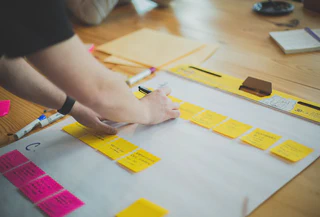
Papers report findings. They rarely report what it takes to generate them. During my postdoctoral fellowship in Professor Maria Knikou’s Klab4Recovery Research Program at the City University of New York — an NIH-funded spinal cord injury neurorecovery program — I spent as much time on planning and coordination as I did on data analysis.
What the work actually looked like
Over the course of the fellowship, I was involved in completing more than 100 experimental sessions combining clinical, neurophysiological, and biomechanical data collection, and in supporting the administration of over 200 locomotor training and transspinal stimulation treatment sessions for individuals with chronic spinal cord injury. Each of those sessions required the same underlying discipline: a documented protocol, a safety and screening process appropriate to each participant’s functional status, calibrated equipment, and a plan for what happens if something doesn’t go as expected.
That’s the planning and management side of adapted physical activity in rehabilitation that’s easy to miss from the outside. It isn’t only about designing a good intervention — it’s about integrating that intervention into a research and treatment team that includes clinicians, physical therapists, and program coordinators, each with their own constraints and their own read on a participant’s safety and progress on a given day.
Assessment as an ongoing process, not a single step
A program like this doesn’t run on a single upfront assessment. Functional status, response to stimulation, and safety all needed to be reassessed session to session — a participant’s tolerance to a given stimulation intensity, for instance, isn’t fixed, and the protocol has to be able to adapt to that in real time without compromising the research design. Some of my contributions here were technical — developing signal-processing approaches and analysis algorithms for the neurophysiological and biomechanical data — but a good part of it was procedural: making sure the same rigor applied to session 5 applied to session 205.
Why this is a competence, not just a task list
None of this shows up in a results section, but it’s arguably what determines whether a research program can be run safely and consistently at all — across NIH funding cycles, across a multidisciplinary team, and across more than a hundred participants. It’s a different kind of skill than running a statistical model, and one I think doesn’t get enough attention in how early-career researchers are trained.
