Aging and Gait Control
 Department of Biomechanics - University of Nebraska at Omaha
Falls are the leading cause of unintentional injuries and hospitalizations among adults aged 65 and older. Even in the absence of physical injury, the psychological consequences—particularly the fear of falling—can significantly reduce physical activity, confidence, and overall quality of life. Despite widespread awareness and intervention efforts, hospitalization rates due to fall-related injuries continue to rise.
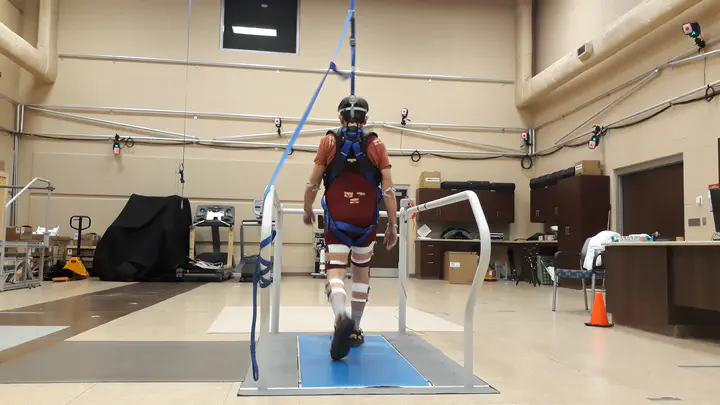
Dr. Andreas Skiadopoulos investigated how older adults adapt their movement under altered inertial conditions, with a specific focus on step width variability—an important determinant of gait stability and fall risk. The study evaluated the effectiveness of a simple lateral stepping gait training program designed to reduce gait variability. The central hypothesis was that decreasing step width variability would enhance balance control and lower the risk of falling.
By targeting gait variability—a modifiable and measurable biomarker—this research contributed to the development of evidence-based interventions and preventative strategies that promote healthy aging and sustained independence among at-risk populations. The study was supported by the NIGMS/NIH COBRE for the Center for Research in Human Movement Variability and the Nebraska Collaboration Initiative.