EUCAPA 2026 · Prague
Motor competence in children aged 6–12 years
Cross-sectional associations with age, sex, and skill component
Andreas Skiadopoulos & Christina EvaggelinouAdapted Physical Education Lab
School of Physical Education and Sport Science at Serres
Aristotle University of Thessaloniki, Greece
Background & rationale
Why motor competence matters
Developmental importance
Motor competence is central to SDG Indicator 4.2.1, a primary measure of children’s developmental readiness, with lifelong links to physical activity, psychosocial well-being and academic performance.
- Shows whether children are developmentally on track in health
- Drives physical activity and supports health across the lifespan
Source: Martins et al. (2024). J Motor Learn Dev, 12(3), 437–454.
Background & rationale
In Greek preschools, difficulties appear from day one
~25%of Greek preschool children are at risk or have movement difficulties
2.2 hof PE per week in Greek preschools, taught by early-childhood educators
MABC-2 classification by age
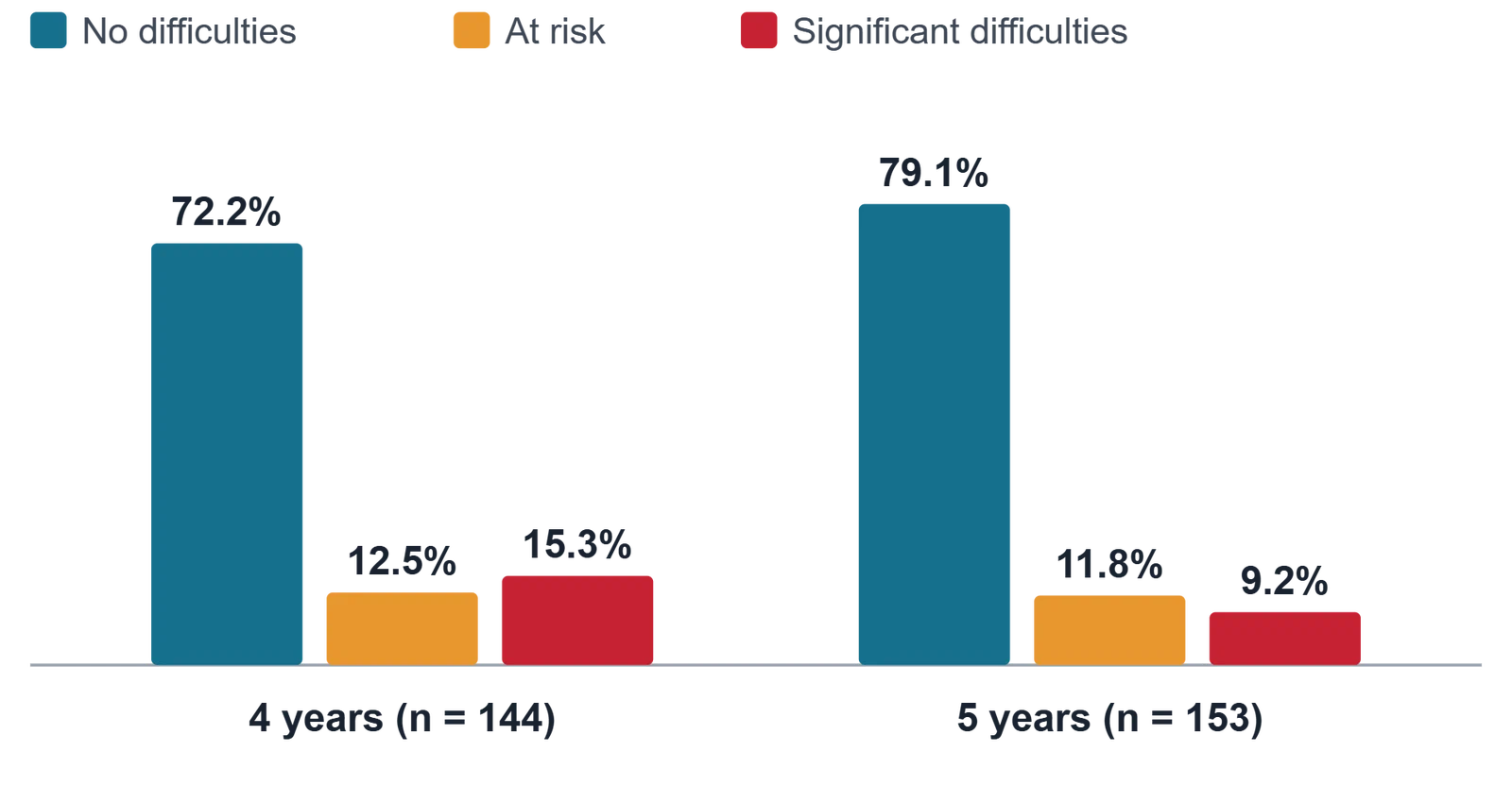
Kechagia et al. (2024), Alberta J Educ Res, 70(2); Karakesis (2024), WHO. Percentages by MABC-2 zones.
The gap
What happens after preschool?
Preschool
~25%at risk or with difficulties
2.2 hPE / week · early-childhood educatorsPrimary school
?at risk or with difficulties
2.7 hPE / week · specialist PE teachersNo study has tracked motor competence across the Greek primary-school years, or asked how much of it depends on which classroom a child is in.
Kechagia et al. (2024); Karakesis (2024), WHO.
Background & rationale
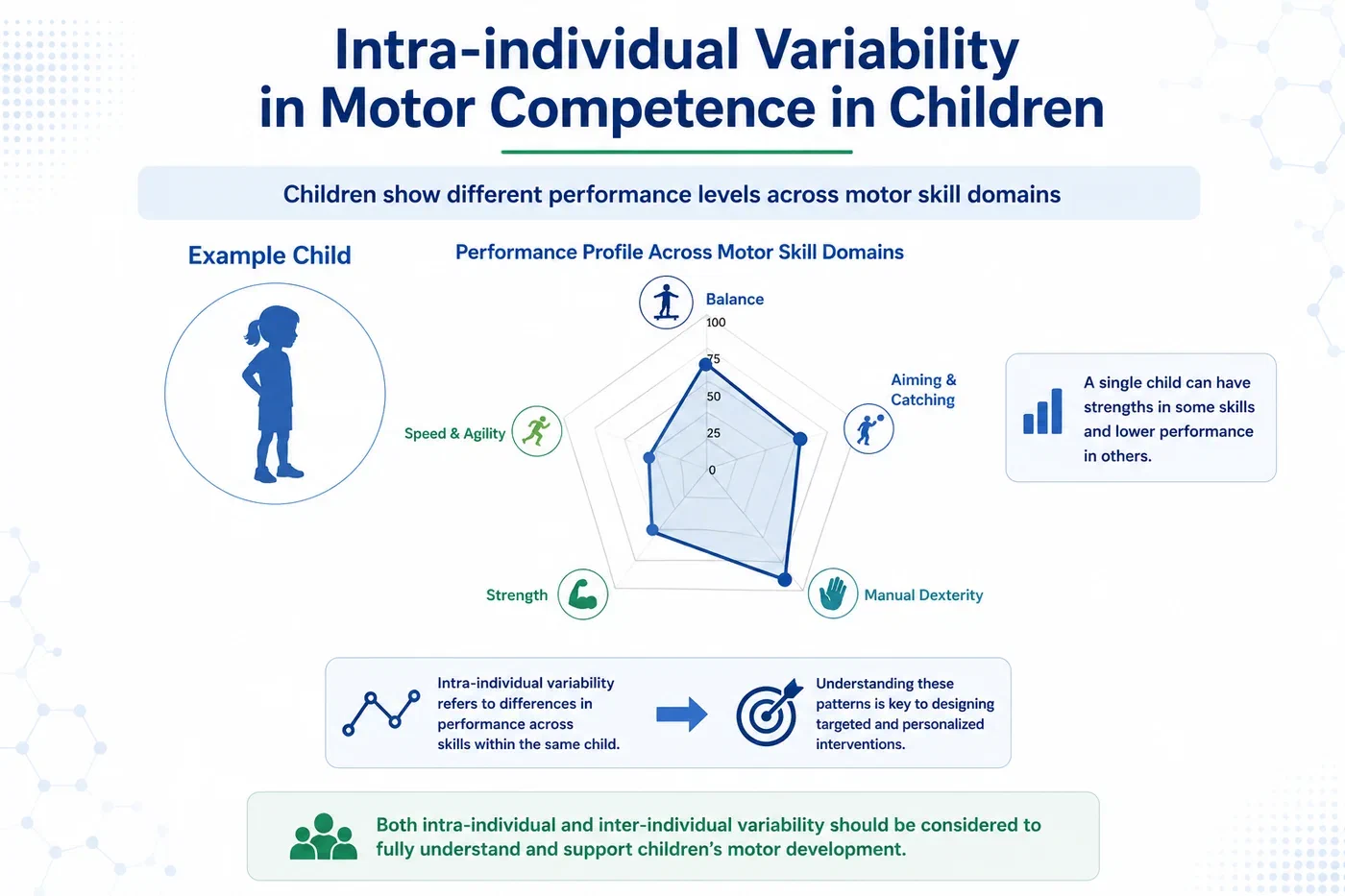
Motor competence is not one thing
Multi-domain structure
Distinct domains recruit partially different neural systems. Composite scores can mask intra-individual variability and misguide interventions.
Greek preschoolers
Low scores appear in both boys and girls.
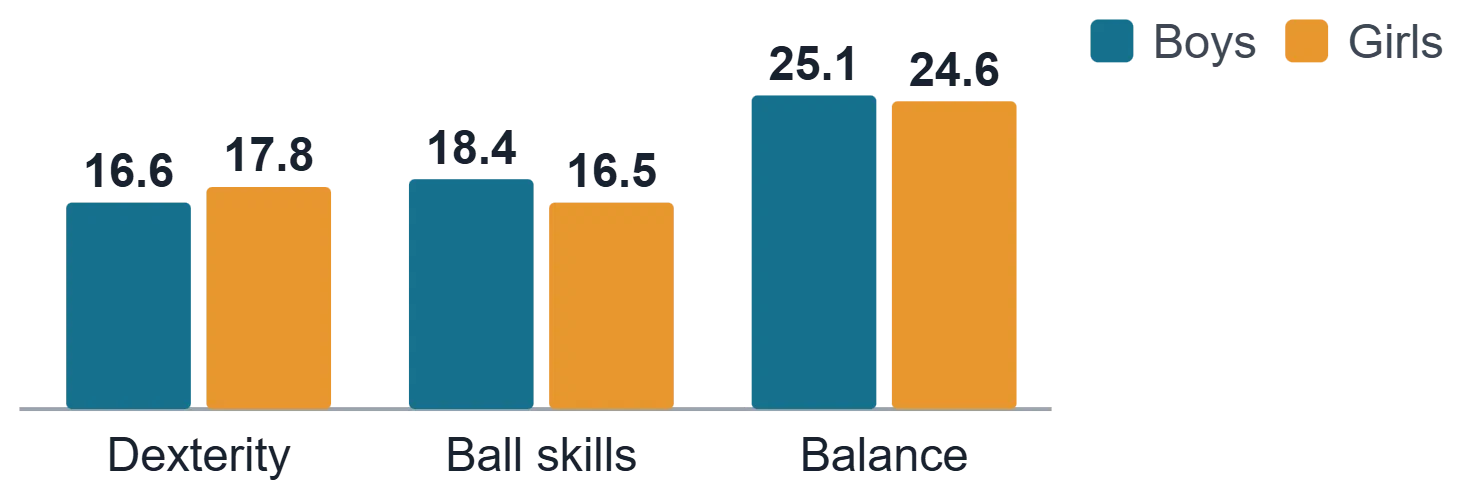
Scores: Kechagia et al. (2024), Alberta J Educ Res, 70(2), 328–352.
Background & rationale
Why context matters: evidence from the literature
Contextual gap
No Greek study has modelled class-level contributions to domain-specific motor profiles. PE quality may vary substantially across classrooms, a potential equity concern.
- Practice scheduling shapes motor learning outcomes (Bortoli et al., 1992)
- Novel PE approaches improve coordination and cognition (Dalziell et al., 2019)
- Cognitive challenge must match each child's motor level (Pesce et al., 2013)
- PA type differentially drives cognitive and academic gains (Vasilopoulos et al., 2023a)
- Creative and varied PA contexts do not uniformly enhance outcomes (Vasilopoulos et al., 2023b)
Study objective
Aim and hypotheses
Examine how gender, age and class context influence motor competence across three domains in Greek primary-school children aged 6–12, using a multilevel modelling framework.
H1
Domain × Gender
Motor competence differs across domains, and these differences vary by gender.H2
Age effects
Age is associated with motor competence, but its effect is domain-specific.H3
Class context
Classroom context contributes to both overall motor level and domain-specific profiles.Methods
Sample, assessment and analysis
312children aged 6–12
50%girls (n = 156)
31classes
14primary schools
Assessment: MABC-2
Three domains evaluated:
- Manual dexterity
- Aiming & catching
- Balance
Children with diagnosed developmental or neurological disorders were excluded.
Analysis: multilevel linear mixed-effects model (REML)
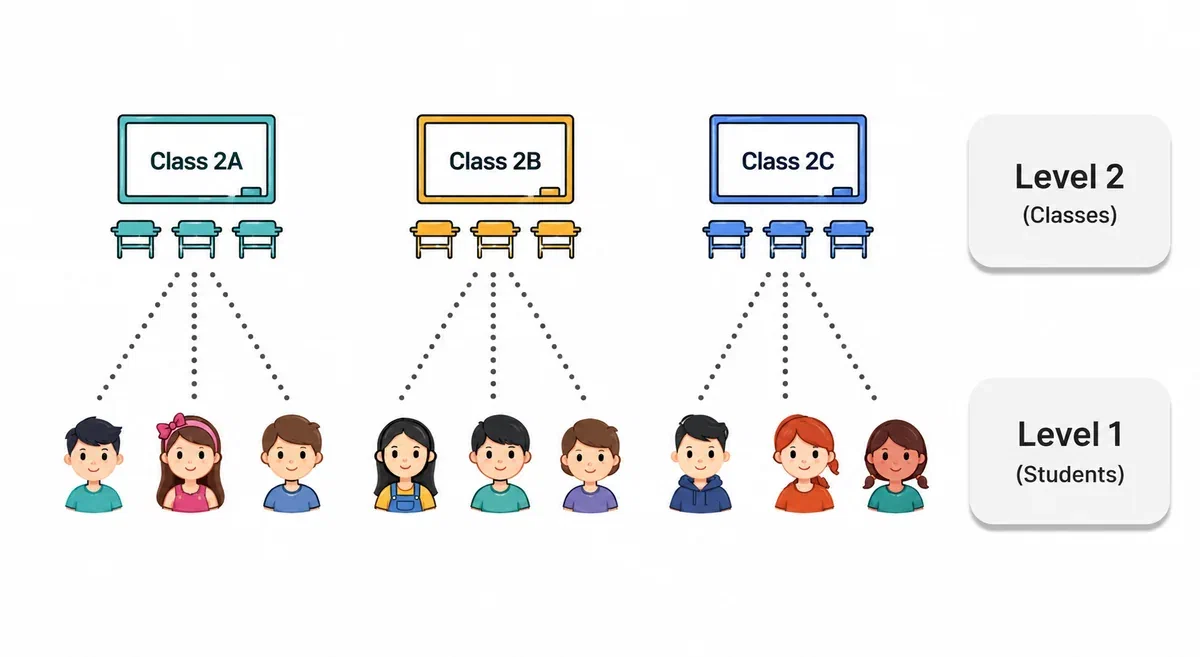
Separates child-level from classroom-level variance.
Urban and semi-urban schools, Macedonia, Greece · stratified by age and gender
Results · Prevalence
Motor challenges persist throughout primary school
Share of children competent in 3, 2, 1 or 0 MABC-2 components, by grade
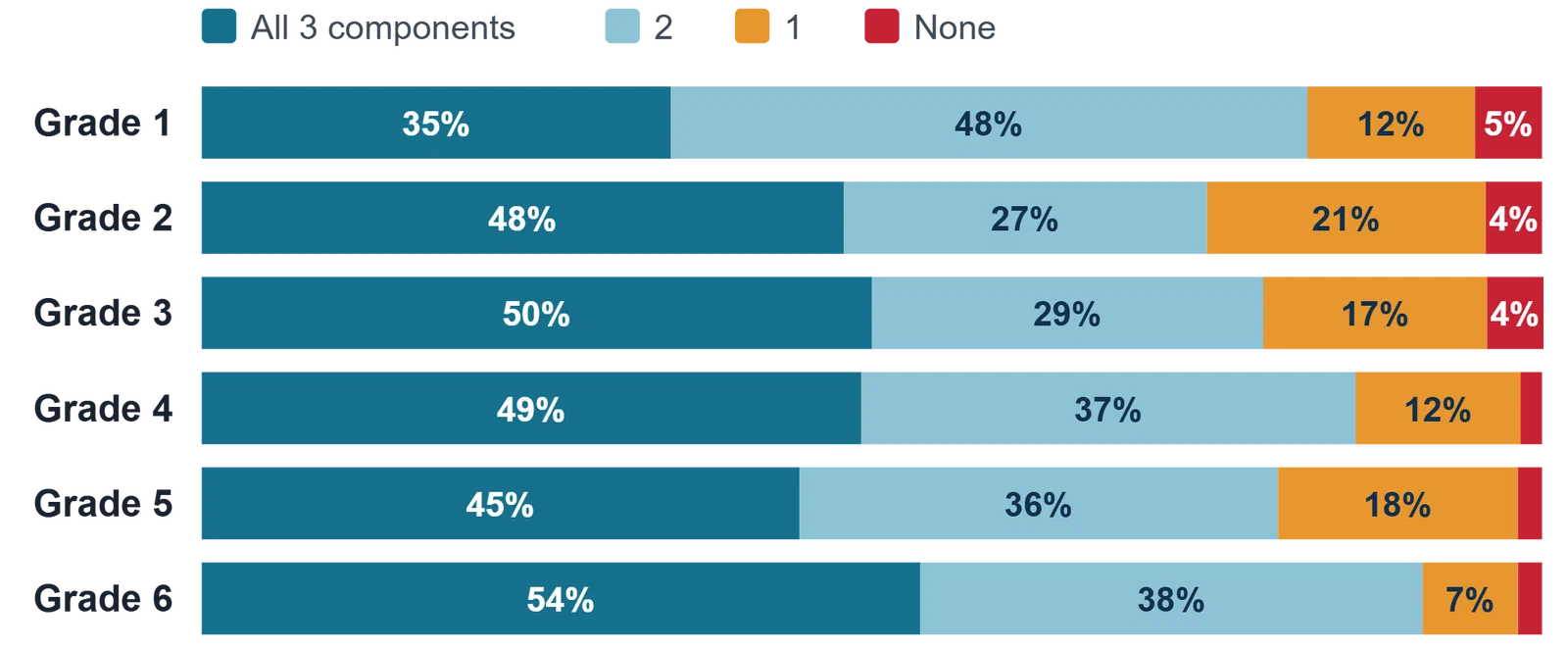
13%at risk (≤16th percentile)
9%severe difficulties (≤5th percentile)
≈ 1 in 5need targeted support
Even by Grade 6, only about half of children are competent in all three components.
Components: manual dexterity, aiming & catching, balance (MABC-2)
Results · Domain profiles
Balance > Aiming–Catching > Manual Dexterity
Mean MABC-2 standard score ± SD · * significant pairwise difference
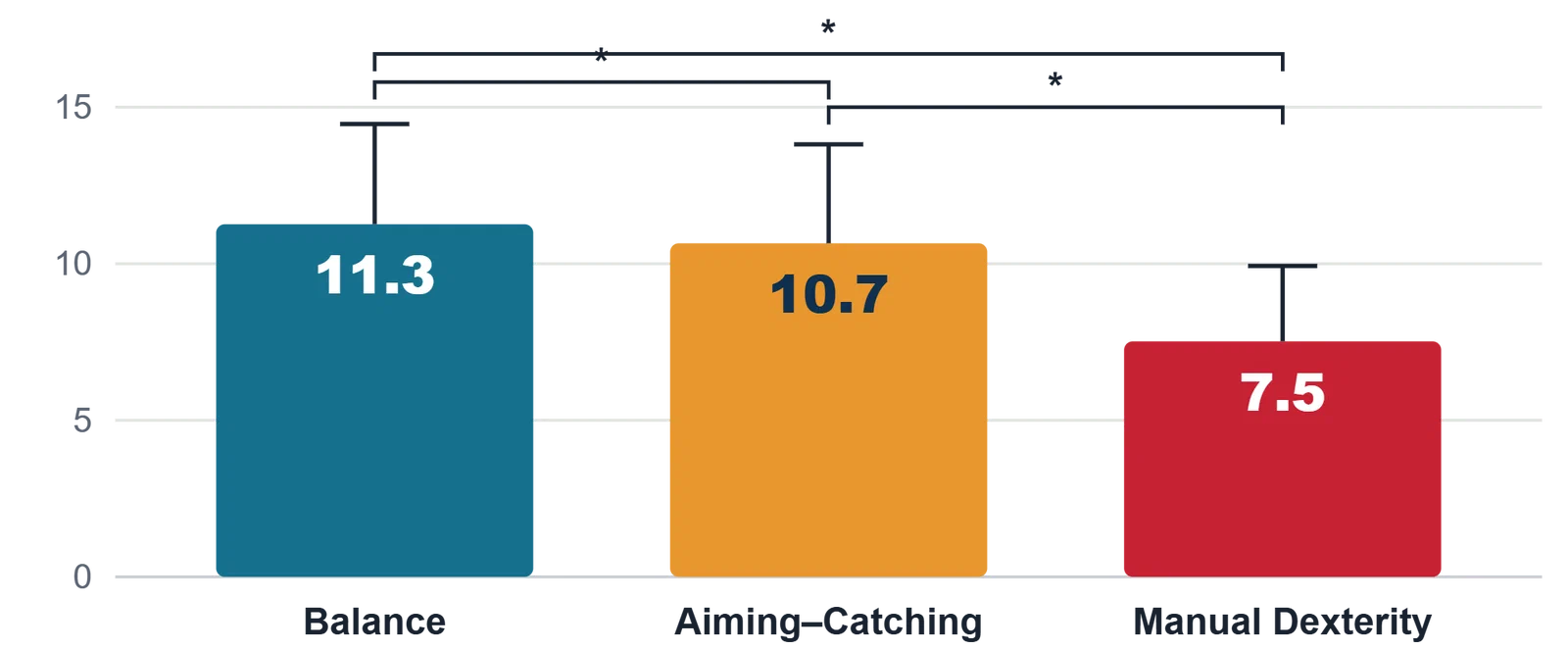
1Balance
2Aiming–Catching
3Manual Dexterity
Weakest at every grade
✓ H1 (domains): supported. All domain differences are statistically significant.
Results · Gender
Mean MABC-2 standard score ± SD by gender
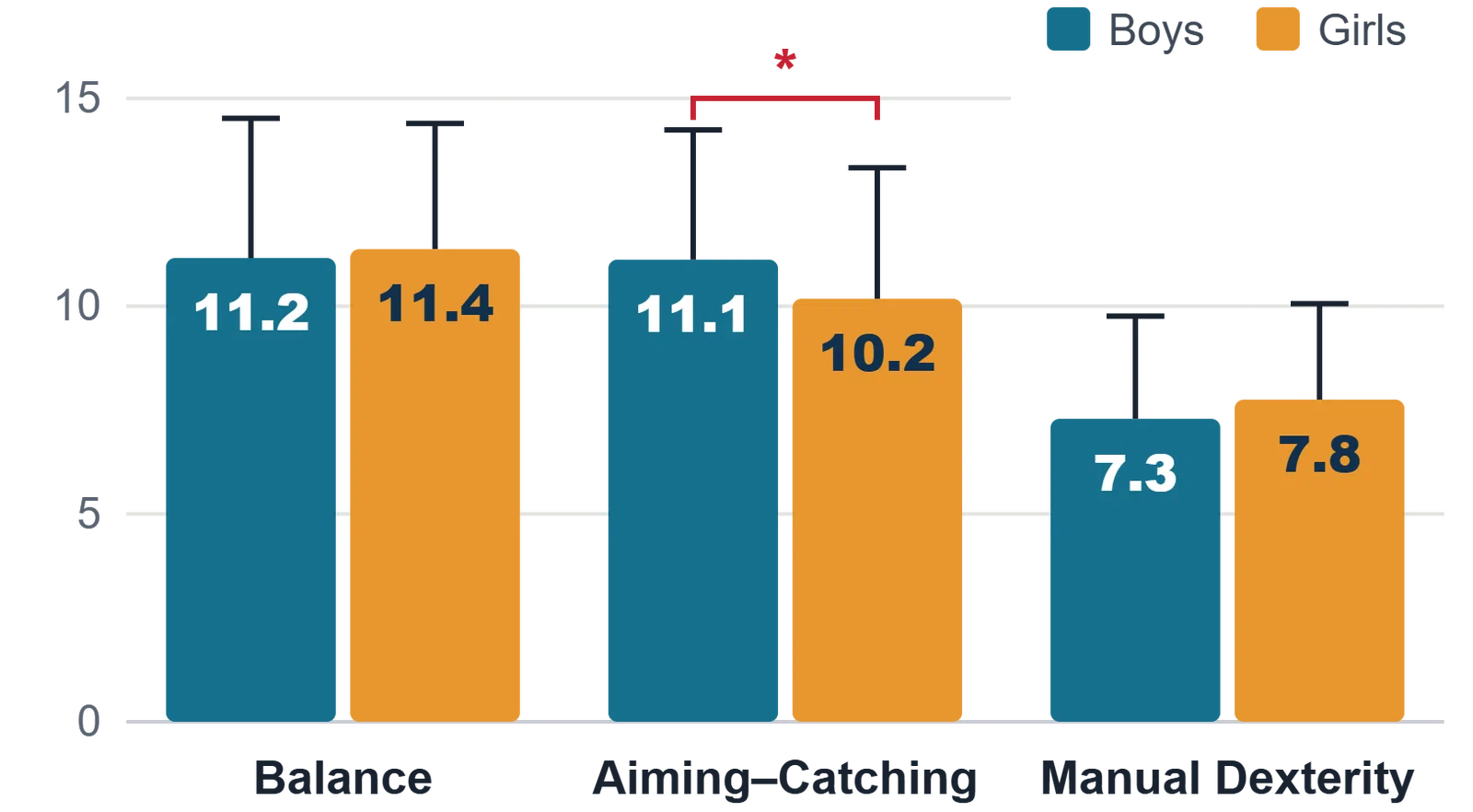
Gender × Domain interaction
F(2, 620) = 9.47, p < .001, η²p = .03
Boys > girls only in aiming–catching
Different profiles
Girls: Balance > Aiming–Catching > Manual Dexterity
Boys: Balance ≈ Aiming–Catching > Manual Dexterity
Same domains, different profiles. This matters for how we plan instruction.
Results · Class-level variability
The classroom shapes motor competence
Variance partition
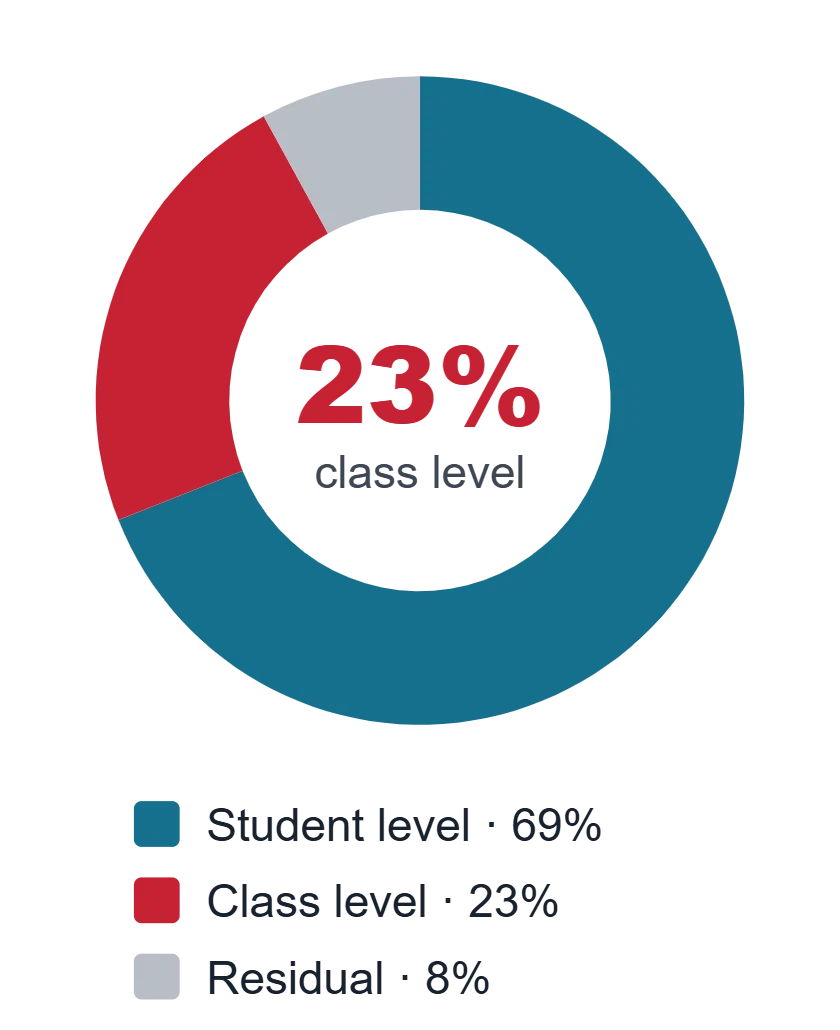
23%variance due to class
17 of 31classes differ from the mean
R²c = .92variance explained
Class random intercepts (± 1.96 SE), all 31 classes ordered low → high
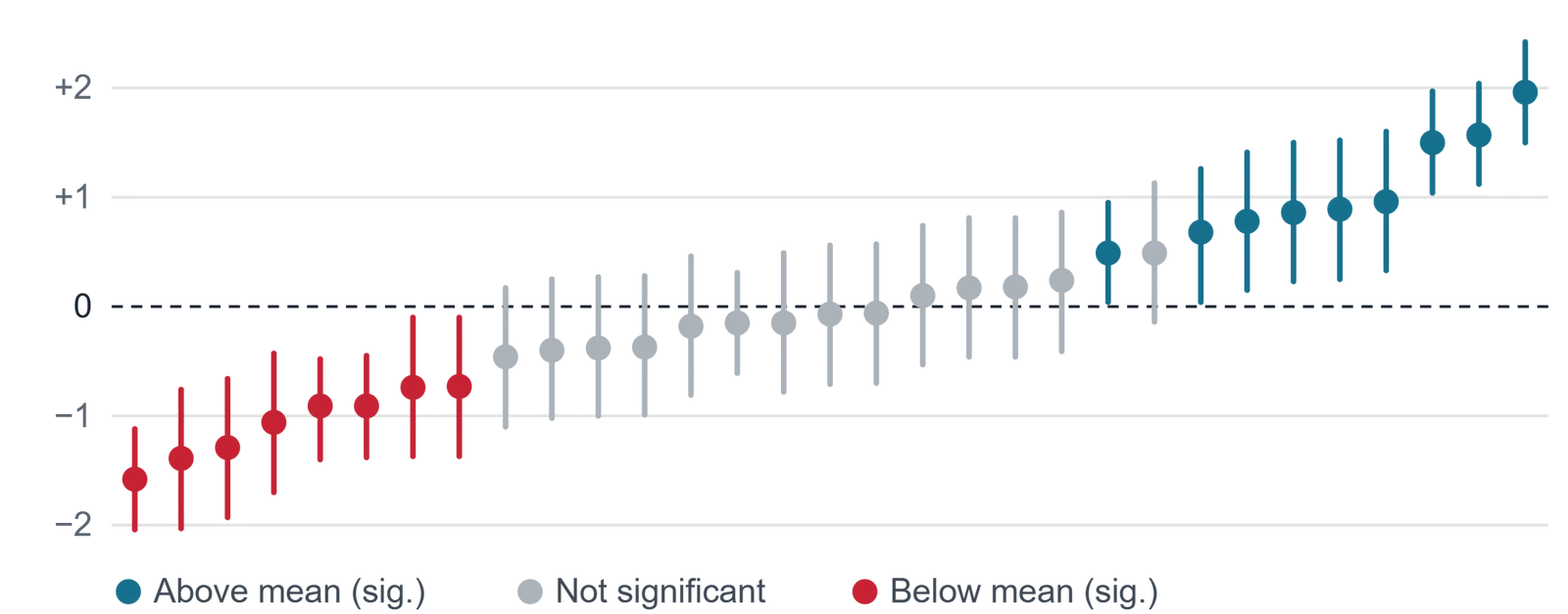
Two-level LMM (children in classes), REML · R²c: fixed + random effects
Discussion
Four findings
1Manual dexterity is a priority domain
Consistently the weakest domain across all ages. Relevant to SDG 4.2.1: fine-motor deficits may constrain writing, tool use and academic skills.
2Gender differences are domain-specific
Boys’ aiming–catching advantage may reflect differential exposure to ball sports (sociocultural channelling). The overall gender effect is negligible, arguing against gender-based ability grouping.
3Class context matters
23% class-level variance, consistent with the bioecological model. PE quality, teacher expertise and resources are modifiable targets; class-level covariates are needed to identify mechanisms.
4One in five need targeted support
13% of children are at risk and 9% show significant movement difficulties; only about half reach competence in all three domains by Grade 6.
Take-home
Key conclusions
- Motor competence is domain-specific: Balance > Aiming–Catching > Manual Dexterity
- Gender differences are confined to aiming–catching (boys > girls)
- Class context accounts for 23% of total variance
- 17 of 31 classes deviate significantly from the grand mean
So what? Implications
Curriculum target
Prioritise manual dexterity in Greek primary-school PE curricula.School-based equity
Address between-class differences in PE quality; class context shapes motor outcomes.Assessment practice
Analyse at the domain level; composite scores mask intra-individual profiles.Future research
Longitudinal designs with class-level covariates (teacher, PE curriculum, resources).EUCAPA 2026 · Prague
Thank you
Andreas Skiadopoulos & Christina EvaggelinouAdapted Physical Education Lab
School of Physical Education and Sports Science at Serres
Aristotle University of Thessaloniki, Greece